How Qigong Gave Me My Life Back – A Real Healing Journey
After years of chronic pain and low energy, I felt like my body had given up. Doctors helped, but something was missing—until I tried qigong. This ancient practice wasn’t a quick fix, but over time, it became the missing piece in my recovery. What started as gentle movement slowly transformed my strength, focus, and resilience. Here’s how a simple daily routine brought real change, not just to my body, but to my whole approach to healing.
The Breaking Point: When Modern Medicine Wasn’t Enough
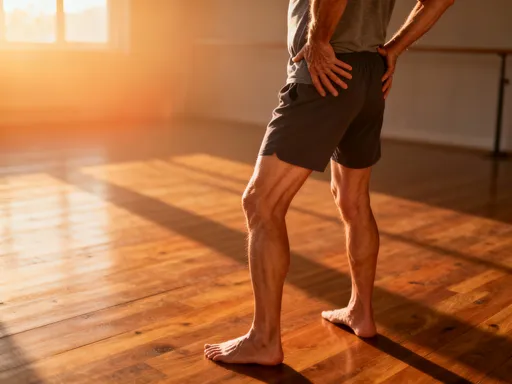
For over five years, persistent lower back pain and unrelenting fatigue shaped nearly every decision. Simple tasks—carrying groceries, playing with grandchildren, even standing in the kitchen—became exhausting. Medical evaluations pointed to a combination of degenerative disc changes and chronic inflammation. Physical therapy offered temporary relief, and medications managed symptoms, but progress plateaued. Despite following every recommendation, the sense of being trapped in a body that no longer worked lingered. Emotional strain followed: frustration, isolation, and a quiet grief for the active life once taken for granted.
It wasn’t that modern medicine failed—it provided essential support and accurate diagnoses. But there was a gap. Treatments addressed the physical structures, yet overlooked the nervous system’s role in pain perception and the toll chronic stress took on healing. The body was being treated as a machine needing repairs, not as a dynamic system influenced by breath, movement quality, and mental state. This realization sparked a search for complementary approaches that could bridge the divide between clinical care and holistic recovery.
Many women in midlife face similar crossroads. Joint stiffness, lingering injuries, or fatigue from years of caregiving and responsibility can erode vitality. When conventional paths reach their limits, the desire for agency grows. That’s when practices like qigong begin to resonate—not as alternatives, but as integrative tools that empower individuals to participate actively in their healing. The turning point came not from rejecting medicine, but from expanding the definition of what healing could include.
Discovering Qigong: More Than Just Movement
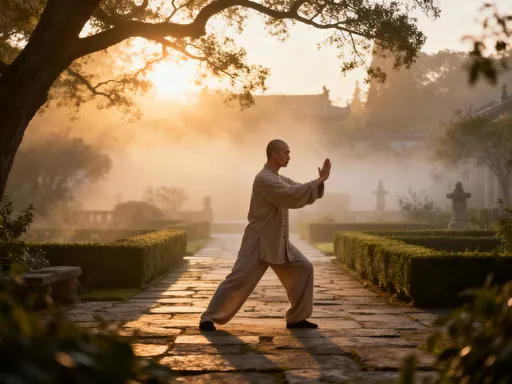
Qigong—pronounced “chee-gong”—is a centuries-old practice rooted in traditional Chinese medicine. The term combines “qi,” meaning vital energy or life force, and “gong,” meaning cultivation or skill. Together, qigong translates to “energy work” or “practice of cultivating life energy.” Unlike high-intensity workouts or even some forms of stretching, qigong emphasizes slow, deliberate movements synchronized with deep, rhythmic breathing and focused awareness. It is not about exertion, but about coordination, presence, and gentle activation of the body’s self-regulating systems.
Historically, qigong was used by healers, martial artists, and monks to maintain health, enhance vitality, and support longevity. It was never intended solely for rehabilitation, but its principles align powerfully with recovery needs. In recent decades, Western medical institutions have begun studying its effects, particularly for chronic pain, balance, and stress-related conditions. Clinical trials and observational studies have shown measurable improvements in pain scores, functional mobility, and quality of life among participants practicing qigong regularly.
While often compared to yoga or tai chi, qigong stands apart in its accessibility and focus. Yoga may require flexibility or strength, and tai chi involves complex sequences. Qigong, by contrast, can be adapted to any fitness level—even practiced seated or lying down. Its movements are simple, repetitive, and designed to be sustainable over time. This makes it uniquely suited for individuals in recovery, where consistency matters more than intensity. The emphasis is not on performance, but on internal awareness and the quality of movement.
Why the Body Heals Better with Mindful Motion
Scientific research increasingly supports the idea that healing is not just a cellular process, but a systemic one influenced by nervous system regulation. Chronic pain and fatigue are often maintained by an overactive sympathetic nervous system—the “fight-or-flight” response. When this state becomes habitual, the body remains in survival mode, diverting resources away from repair and immune function. Qigong helps shift the balance toward the parasympathetic nervous system—the “rest-and-digest” state—creating optimal conditions for recovery.
Slow, rhythmic movements combined with diaphragmatic breathing stimulate the vagus nerve, a key component of parasympathetic activation. This leads to measurable reductions in cortisol, the primary stress hormone. Lower cortisol levels correlate with decreased inflammation, improved sleep, and enhanced tissue regeneration. Additionally, the gentle motion promotes microcirculation—increasing blood flow to muscles, joints, and connective tissues without straining the cardiovascular system. This nourishes cells, removes metabolic waste, and supports joint lubrication, all of which are critical in rehabilitation.
Mindful motion also re-educates the brain-body connection. Chronic pain can lead to fear of movement, causing muscle guarding and altered movement patterns. Qigong encourages re-engagement with the body in a safe, controlled way. By focusing on smooth, coordinated actions, individuals rebuild proprioception—the sense of where the body is in space—and reduce the hypersensitivity that often accompanies long-term pain. Over time, this fosters a sense of safety within the body, which is foundational for healing.
My Daily Practice: Simple Routines That Made a Difference
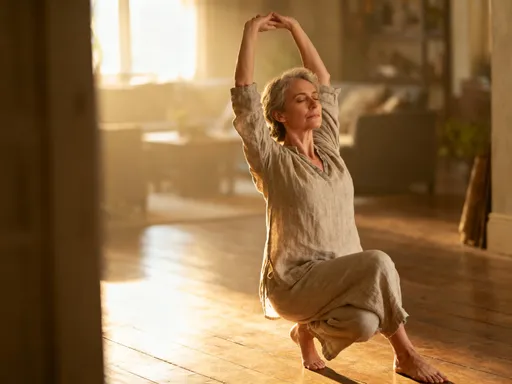
Starting was the hardest part. With limited energy and skepticism, the idea of adding another task felt overwhelming. The key was simplicity. My routine began with just ten minutes a day, preferably in the morning, when the house was quiet and the mind was fresh. I wore comfortable clothing and stood barefoot on a yoga mat, though a sturdy chair worked just as well on days when standing was too much.
One of the first exercises I learned was Lifting the Sky. Standing with feet shoulder-width apart, I inhaled slowly as I raised my arms in front of me, then overhead, palms facing up as if lifting an invisible weight. At the top of the motion, I paused briefly, then exhaled as I lowered my arms back down, palms turning downward. This movement, repeated six to eight times, created a gentle stretch through the spine and shoulders while synchronizing breath with motion. It felt grounding, almost meditative.
Another foundational exercise was Separating Heaven and Earth. With one hand rising overhead, palm up, and the other descending toward the hip, palm down, I imagined creating space between the sky and the earth. I shifted weight gently from side to side, maintaining soft knees and a relaxed posture. This movement encouraged spinal rotation and lateral stretching, improving mobility in the torso and hips. The imagery—though simple—helped maintain focus and made the practice feel meaningful.
I also incorporated gentle swaying, a rocking motion from side to side or front to back, keeping the knees slightly bent. This helped release tension in the lower back and hips while promoting balance. What made these exercises effective was not their complexity, but their repetition and attention to detail. I avoided forcing movements or striving for perfection. Instead, I focused on smooth transitions, relaxed breathing, and staying present. Over time, the routine expanded to 20 minutes, but the core remained consistent.
Tracking Progress: Small Shifts, Real Results
Improvement did not come overnight. There were days when pain flared and motivation waned. But when I looked back over weeks and months, the changes were undeniable. One of the earliest shifts was in sleep quality. Within four weeks, I noticed falling asleep more easily and waking less frequently during the night. Deeper rest translated to more energy during the day, reducing reliance on afternoon naps.
Joint stiffness, especially in the morning, began to ease. Where I once needed ten minutes to stand upright after waking, I could now move with greater fluidity. Simple actions like bending to tie shoes or reaching for a high shelf became less painful. Pain medication use decreased—not eliminated, but used more sparingly and only when truly needed. This reduction was not due to the pain vanishing, but to a greater sense of control and resilience.
Mood improvements were equally significant. The daily practice became a form of moving meditation, offering a mental break from daily worries. I noticed feeling calmer, more centered, and less reactive to stress. Family members commented on my increased patience and presence. These emotional shifts were not incidental—they were part of the healing process. When the nervous system is regulated, emotional stability follows. Tracking progress through a simple journal helped maintain motivation. Noting small wins—like walking farther, sleeping better, or feeling less tense—reinforced the value of consistency.
Integrating Qigong with Professional Rehabilitation
It is essential to emphasize that qigong did not replace medical care. It complemented it. My physical therapist, initially cautious, became supportive once she saw improvements in my range of motion and reported pain levels. We worked together to ensure the movements I practiced did not conflict with my prescribed exercises. In fact, she began incorporating some qigong-inspired breathing techniques into our sessions to help me relax before stretching.
My primary care provider also took note. During a routine check-up, she observed that my blood pressure had stabilized within a healthier range. While multiple factors could contribute, she acknowledged that stress reduction and improved physical activity likely played a role. She did not prescribe qigong, but she did not discourage it—instead, she encouraged me to continue what was working, as long as it was safe and evidence-informed.
This integration is key. Qigong is most effective when used alongside professional guidance, not in place of it. For women managing chronic conditions, the goal is not to choose between conventional medicine and holistic practices, but to weave them together into a personalized recovery plan. Open communication with healthcare providers ensures safety and fosters a collaborative approach. When doctors, therapists, and patients align, healing becomes a shared journey rather than a solitary struggle.
Building a Sustainable Healing Lifestyle
What began as a rehabilitation tool gradually evolved into a cornerstone of daily wellness. Even after my pain levels decreased and mobility improved, I continued the practice. It was no longer about fixing something broken, but about nurturing what was already working. The routine became a form of self-respect—a daily commitment to listening to my body and honoring its needs.
This shift in mindset was profound. I moved from seeing my body as an enemy that betrayed me to viewing it as an ally that responded to care. Greater body awareness emerged: I could sense tension building before it turned into pain, and I knew when to rest or adjust my posture. This awareness extended beyond movement—into nutrition, sleep habits, and emotional boundaries. Qigong became a gateway to a more intentional way of living.
Sustainability came from simplicity. Because the practice required no special equipment, gym membership, or large time commitment, it was easy to maintain. On busy days, I practiced for five minutes. On difficult days, I modified the movements. The lack of pressure to perform made it resilient. Over time, it became as routine as brushing my teeth—a non-negotiable part of caring for myself. This consistency, more than any single session, built lasting resilience.
Conclusion: Healing as a Practice, Not a Destination
True healing is not a finish line. It is an ongoing process of listening, adapting, and showing up for oneself. Qigong taught me that recovery is not passive—it requires presence, patience, and daily practice. By combining the wisdom of ancient traditions with modern medical understanding, I found a path that honored both science and self-awareness. The movements were simple, but their impact was profound.
For women navigating the physical and emotional challenges of midlife and beyond, the message is clear: healing is possible, even when conventional paths feel incomplete. It does not require dramatic changes or expensive treatments. Often, it begins with a few minutes of mindful movement, a deep breath, and the willingness to reconnect with the body. Progress may be slow, but it is real.
Qigong did not give me back the body I had twenty years ago—that was never the goal. Instead, it gave me back my sense of agency, my energy, and my hope. It reminded me that healing is not about perfection, but about showing up, one breath, one movement, at a time. And sometimes, that is enough to change everything.