You Won’t Believe What I Ate in Cappadocia
Cappadocia is more than hot air balloons and fairy chimneys—it’s a food lover’s dream waiting to be discovered. I went searching for adventure but ended up falling headfirst into its rich culinary soul. From smoky kebabs cooked in underground ovens to sweet pastries dusted with pistachios, every bite told a story. This is real, unfiltered flavor, rooted in centuries of tradition. If you think Turkish food is just doner and baklava, trust me—you’re in for a wild surprise.
First Impressions: A Landscape That Feeds the Senses
The moment you step into Cappadocia, the land feels alive with stories. Towering rock spires rise like ancient sentinels, their honeycombed cliffs carved by wind and water over millennia. These otherworldly formations—known as fairy chimneys—are not just a visual marvel; they are deeply connected to how people live, grow, and eat here. The volcanic soil, formed from ancient eruptions of Mount Erciyes and Mount Hasan, is rich in minerals that nurture an exceptional range of crops. This geology gives Cappadocia its distinctive agricultural bounty: apricots so sweet they taste like sunshine, wild thyme that perfumes the air, and honey with a deep amber hue and floral depth unlike any other.
Farming in Cappadocia is an act of harmony with nature. Terraced vineyards cling to rocky slopes, while underground storage chambers—carved directly into the soft tuff stone—keep root vegetables cool through scorching summers and freezing winters. These natural cellars were once essential for survival during invasions and harsh climates, but today they remain vital to food preservation and fermentation. Even the homes are built into the rock, with kitchens nestled within cave dwellings where meals are still prepared using methods passed down for generations. It becomes clear quickly that food here is not separate from the landscape—it emerges from it, shaped by the same forces that sculpted the cliffs.
Walking through a local market in Göreme, you’ll find baskets overflowing with ruby-red pomegranates, sun-dried tomatoes wrapped in cheesecloth, and jars of mountain herbs harvested by hand. Vendors speak proudly of their family plots, some cultivated for over a century. There’s a quiet reverence for the land, a sense that what grows here carries the memory of those who tended it before. For visitors, this connection transforms dining into something deeper than sustenance—it becomes an intimate dialogue with history, geology, and community.
Breakfast Like Nowhere Else: The Turkish “Kahvaltı” Experience
If there’s one meal that captures the heart of Turkish hospitality, it’s breakfast—or kahvaltı, which literally means “before coffee.” In Cappadocia, breakfast is not a hurried affair but a ceremonial celebration of abundance, flavor, and togetherness. At a family-run guesthouse perched on a hillside overlooking the valleys, I was greeted one morning with a table so laden with dishes it seemed almost theatrical. Yet every item had purpose and provenance. Platters held creamy beyaz peynir (white cheese), crumbly tulum cheese aged in goat skins, and feta-like cheeses marinated in olive oil with mint and chili flakes. Bowls brimmed with olives—some green and buttery, others black and briny—each variety reflecting a different village’s recipe.
But the star of the table was the honey. Drizzled generously over thick slices of kaymak, a clotted cream so rich it melts like butter on warm bread, this wasn’t ordinary honey. It came from hives placed high in the mountain meadows, where bees feed on thyme, wild lavender, and sage. The result is a golden nectar with layers of flavor—floral, herbal, slightly smoky—that lingers on the palate long after the last bite. Alongside it sat baskets of freshly baked simit and gözleme, still warm from the saj (a convex griddle), and small dishes of tomato and cucumber salad sprinkled with sumac for a tart finish.
What makes this experience transformative is the rhythm. Guests are encouraged to linger, pour more tea, share stories. Children run between tables with trays of jam made from sun-ripened apricots. The host might bring out a new dish halfway through the meal—perhaps a spoonful of wild mountain herb butter or a jar of homemade pickled peppers—just because “you should try this.” There’s no rush, no guilt about eating slowly or sampling everything. This is food as care, as culture, as connection. For many travelers, especially women balancing busy households back home, this unhurried morning ritual offers a rare gift: permission to savor, to be present, to nourish both body and spirit.
Underground Kitchens: Cooking with History
Beneath the surface of Cappadocia lies a hidden world—not of secrets, but of sustenance. The region’s porous volcanic rock made it ideal for carving vast underground cities, some stretching dozens of meters deep with ventilation shafts, stables, and even chapels. But these subterranean labyrinths weren’t just for shelter—they doubled as kitchens and pantries. Families stored grains, legumes, and dairy in cool cave chambers, while communal ovens baked bread using residual heat from wood fires. Today, visitors can explore reconstructed cooking spaces and even participate in workshops that revive these ancient techniques.
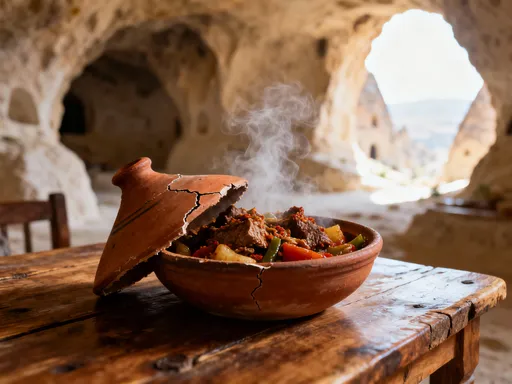
One of the most iconic dishes born from this underground tradition is testi kebab, also known as “pottery kebab.” A mixture of lamb, vegetables, tomatoes, peppers, and spices is sealed inside a conical clay pot, then slow-cooked in a wood-fired oven for hours. The pot is brought to the table unopened, and with a dramatic tap of a knife, the crust is cracked open to release a cloud of aromatic steam. The meat falls apart at the touch of a fork, infused with its own juices and the smoky essence of the fire. Eating testi kebab isn’t just a meal—it’s a performance, a moment of shared anticipation that draws people together.
Several boutique cooking schools in Ürgüp and Avanos now offer hands-on classes where guests learn to prepare testi kebab using traditional tools and spice blends. Women in their fifties and sixties, many of whom grew up cooking in cave homes, lead these sessions with warmth and precision. They teach not only recipes but the philosophy behind them: how to balance flavors without measuring spoons, how to tell when dough is ready by touch, and why certain herbs are added at specific times of year. These are skills born of necessity, refined over decades, and now generously shared with those eager to learn.
The resurgence of interest in these historical cooking methods reflects a broader movement toward mindful eating and cultural preservation. For travelers, especially those who value family traditions and home-cooked meals, participating in such a workshop offers more than culinary knowledge—it provides a tangible link to a way of life that honors patience, resourcefulness, and the wisdom of ancestors.
Street Food Gems: What Locals Actually Eat
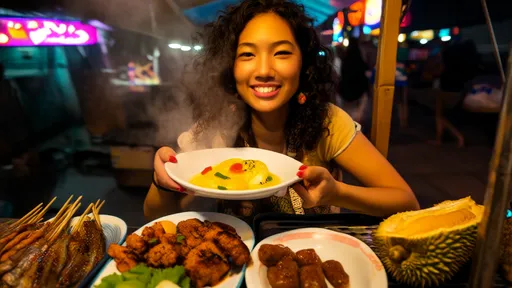
While fine dining has its place, the true soul of Cappadocian cuisine pulses in its markets and street corners. In the bustling town centers of Nevşehir and Ürgüp, food is not hidden behind menus or pretense—it’s displayed openly, sold by vendors who’ve spent lifetimes mastering their craft. A morning walk through the covered market reveals stalls piled high with flatbreads, spiced sausages, and steaming trays of savory pastries. The scent of cumin, paprika, and grilled meat hangs in the air, mingling with the chatter of bargaining and laughter.
One of the most beloved street foods is gözleme—a hand-rolled flatbread stuffed with fillings like spinach and feta, minced meat and onions, or grated potato and herbs. Cooked on a hot griddle until crisp and golden, it’s folded into quarters and served with a wedge of lemon. Unlike mass-produced versions found in tourist zones, the gözleme here is made fresh to order, often by women who learned the technique from their mothers. Each bite carries the warmth of the kitchen, the pride of craftsmanship.
Another staple is simit, the sesame-encrusted bread ring often compared to a bagel but lighter and more delicate. Sold from wooden carts or small bakeries, it’s perfect with a cup of strong Turkish tea. For those seeking something heartier, there are dürüm—thin wraps filled with grilled meat, lettuce, and garlic yogurt—that make an ideal midday snack during long hikes through the Rose Valley.
What sets these experiences apart is the human connection. I once struck up a conversation with an elderly vendor selling apricot-filled pastries outside a mosque. We shared tea, and through broken English and gestures, she invited me into her tiny kitchen behind the stall, where her daughter rolled dough on a worn wooden board. There was no agenda, no tip expected—just the simple joy of sharing food and story. These moments remind us that eating is not just about nutrition; it’s about belonging, about being welcomed, even briefly, into someone else’s world.
Wine from Volcanic Soil: Cappadocia’s Hidden Vineyards
Far from the well-trodden wine regions of France or Italy, Cappadocia has quietly become a rising star in the world of viticulture. Its high-altitude vineyards, planted in rocky, mineral-dense soil, produce grapes with intense character and complexity. Indigenous varieties like Öküzgözü, known for its juicy red fruit notes and soft tannins, and Narince, a white grape with citrus and stone-fruit aromas, thrive in this unique terroir. These are not international varietals grown everywhere—they are expressions of place, shaped by centuries of adaptation to this rugged landscape.
Visiting a family-run winery in the village of Mustafapaşa offers a glimpse into this quiet revolution. Tastings take place in centuries-old cave cellars, where temperature and humidity remain naturally stable year-round. The owners, often third- or fourth-generation vintners, speak passionately about reviving ancestral practices—using clay qvevri vessels for fermentation, hand-harvesting grapes at dawn, and avoiding chemical additives. Their wines are not loud or overly oaked; they are balanced, expressive, and deeply drinkable.
What’s especially meaningful for visitors is the accessibility of these experiences. Unlike formal châteaux in other regions, Cappadocian wineries welcome guests with open arms. A tour might include a walk through the vineyard, a peek into the fermentation room, and a seated tasting paired with local cheeses and cured meats. For women who appreciate authenticity and craftsmanship, these intimate encounters offer a refreshing contrast to commercialized wine tourism. More than just sampling wine, it’s about understanding the care, patience, and generational knowledge that go into every bottle.
The revival of winemaking in Cappadocia also reflects a broader cultural reawakening. Once suppressed during periods of religious conservatism, viticulture is now celebrated as part of Turkey’s diverse heritage. Wineries host festivals, collaborate with chefs, and partner with local artisans to create holistic experiences. It’s a reminder that tradition doesn’t have to be frozen in time—it can evolve, adapt, and thrive.
Sweet Endings: Beyond Baklava
No meal in Cappadocia feels complete without something sweet. While baklava—layers of filo pastry, chopped nuts, and honey syrup—is rightly famous, the region’s dessert repertoire extends far beyond it. In fact, many locals consider baklava a special-occasion treat, reserved for holidays and weddings. Everyday sweets are simpler, often made with milk, rice, or semolina, and flavored with rosewater, mastic, or citrus zest.
One such delight is sütlaç, a baked rice pudding with a caramelized top that crackles under the spoon. Served cool, it’s creamy and comforting, often dusted with cinnamon. Another favorite is kazandibi, meaning “bottom of the pot,” a caramelized version of tavuk göğsü (chicken breast pudding) that develops a dark, smoky crust during slow cooking. Despite its name, modern versions use milk and cornstarch, creating a silky texture with a hint of burnt sugar.
Then there’s helva—not the crumbly sesame kind, but a rich, buttery version made by slowly toasting flour in ghee until golden, then stirring in sugar syrup and crushed pistachios. It’s dense, fragrant, and deeply satisfying, often served during winter months or after heavy meals to aid digestion. In a small shop in Avanos, I watched a grandmother and her granddaughter prepare helva together, their hands moving in practiced rhythm. The elder guided the younger, adjusting heat and timing without measuring—another example of knowledge passed hand to hand, generation to generation.
Sweets here are more than indulgence; they are woven into daily life and seasonal rhythms. Apricot conserves appear in spring, rose petal jam in early summer, and pumpkin desserts during autumn harvests. Even simple treats like dried figs wrapped in walnuts or sesame cookies dipped in tea carry emotional weight—reminders of childhood, of family gatherings, of moments of quiet joy. For travelers, especially those who cherish homemade desserts and kitchen traditions, tasting these confections is like stepping into a living archive of love and memory.
Bringing It Home: How to Savor Cappadocia Beyond the Trip
The beauty of food is that it travels with you—not just in recipes, but in memory, in habit, in the way it changes how you see your own kitchen. Returning home from Cappadocia, I found myself slowing down at breakfast, setting the table with care, brewing tea just a little longer. I began seeking out Turkish spices—pul biber (mild red pepper flakes), isot (smoked Urfa pepper), and çörek otu (nigella seeds)—and experimenting with them in soups, rice dishes, and flatbreads. I even tried making a simplified version of testi kebab in a Dutch oven, sealing the pot with dough to trap the steam, just as they do in the caves.
Authentic ingredients can be found online or in Middle Eastern markets: jars of kaymak, boxes of优质 pistachios, bottles of pomegranate molasses. A few well-chosen items can transform an ordinary weeknight dinner into a sensory journey. But more than replication, the goal is resonance—capturing the spirit of Cappadocian cooking: patience, generosity, respect for ingredients.
Mindful eating, too, becomes a form of remembrance. When I take time to truly taste my food, to notice textures and aromas, to eat without distraction, I honor the women I met—the bakers, the cheese makers, the grandmothers stirring pots with quiet pride. Their legacy isn’t just in recipes; it’s in the values they embody: care, continuity, connection.
Traveling through food is one of the most personal journeys we can take. It bypasses guidebooks and checklists, leading us straight to the heart of a place. In Cappadocia, where every meal feels like an invitation, I didn’t just discover new flavors—I discovered a deeper way of living. And that, perhaps, is the most unforgettable dish of all.