You Won’t Believe What Ljubljana’s Hidden Art Spaces Just Revealed
Ljubljana doesn’t shout — it whispers beauty through alleyway murals, quiet galleries, and repurposed factories humming with creativity. I went searching for art beyond the postcard spots and found something deeper: soul. From underground collectives to riverside installations, the city’s creative pulse is real, raw, and refreshingly unpolished. If you think art stops at museums, think again. Ljubljana proves that the best galleries don’t always have names — sometimes, they’re hidden in plain sight.
Arrival with a Different Lens
Ljubljana greets visitors not with grand monuments, but with a gentle rhythm of life unfolding along cobbled lanes and tree-lined riverbanks. The city center is compact, walkable, and refreshingly free of the overwhelming crowds seen in other European capitals. Pastel-hued buildings lean over the Ljubljanica River like old friends sharing secrets, their reflections shimmering in the slow-moving water. Bicycles glide past cafes where people sip espresso and read books, undisturbed by rush or noise. This is not a city built for speed. It invites slowness — the kind that allows space for noticing.
For many, travel means ticking off famous sights. But in Ljubljana, the most meaningful experiences come not from checking boxes, but from wandering without a map. The shift begins in mindset: arriving not as a tourist hunting landmarks, but as a curious observer open to surprise. Here, art isn’t confined behind glass or within ticketed halls. It spills onto sidewalks, blooms in courtyards, and hums in forgotten corners. This quiet capital of Slovenia has cultivated a culture where creativity isn’t reserved for elites — it’s woven into the everyday.
The city’s scale makes this kind of exploration not only possible but deeply rewarding. You can cross from the old town to the university district in under twenty minutes on foot, passing layers of history and innovation along the way. Each turn reveals something unexpected — a stencil of a dancing bear on a side wall, a pop-up poetry reading in a converted tram, a tiny sculpture tucked into a tree trunk. There’s no need to chase experiences. In Ljubljana, they find you — if you’re willing to look.
The Heartbeat of Metelkova Mesto
If there’s a living, breathing soul to Ljubljana’s alternative art scene, it pulses strongest in Metelkova Mesto. Once a cluster of Austro-Hungarian military barracks, this seven-building complex stood abandoned after Slovenia’s independence — until a coalition of artists, activists, and cultural groups occupied it in 1993. They fought eviction, won public support, and transformed the site into an autonomous cultural zone. Today, Metelkova is not just a place; it’s a statement. A declaration that art, music, and community belong to the people.
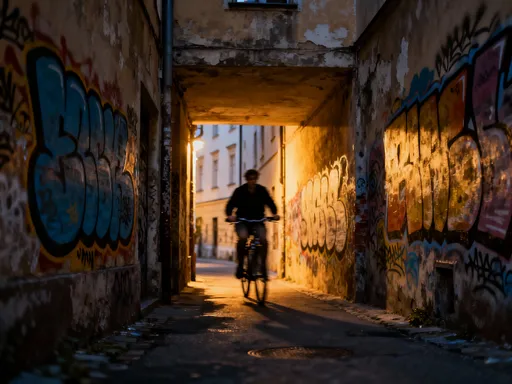
Entering Metelkova feels like stepping into another dimension. Walls explode with layers of graffiti, each piece a dialogue between artists across time. Murals stretch from ground to rooftop, depicting everything from surreal dreamscapes to fierce political messages. The air carries the scent of spray paint, damp stone, and woodsmoke from outdoor fire pits. At dusk, strings of colored lights flicker on, illuminating makeshift stages and open-air dance floors. A low thump of bass emerges from behind a corrugated metal door — a techno set in one of the underground clubs. Elsewhere, a theater collective rehearses a performance in a repurposed storage room.
What makes Metelkova extraordinary is its authenticity. Unlike sanitized cultural districts designed for tourism, this space remains raw and unfiltered. It’s not polished. It’s not quiet. And it never pretends to be. Performances happen in languages you might not understand. Installations are made from scrap metal, old furniture, and recycled textiles. Events are announced on hand-painted posters taped to walls. There’s no admission fee, no schedule to follow, no obligation to stay. Yet thousands visit each year, drawn by the energy of something real — art that exists not for profit or prestige, but for expression.
For families and solo travelers alike, Metelkova offers a rare glimpse into how creativity can thrive outside institutional walls. While not every corner is suitable for young children, the broader atmosphere of freedom and inclusion resonates deeply, especially with those who value authenticity over convenience. This is where Ljubljana’s rebellious spirit lives — not in protests or slogans, but in the daily act of making space for voices that might otherwise go unheard.
Galleries That Don’t Play by the Rules
Beyond the chaos of Metelkova, Ljubljana nurtures a network of intimate, unconventional galleries that challenge the traditional idea of what an art space should be. Take Kapelica Gallery, housed in a former chapel near the central market. Though small in size, its impact is significant. Run largely by volunteers, Kapelica focuses on bio-art, digital activism, and interdisciplinary projects that blur the line between science and creativity. One recent exhibition featured living bacteria arranged to form political symbols, prompting conversations about surveillance, identity, and ethics in biotechnology.
Then there’s P74 Center for Contemporary Art, a hub for experimental visual and performance art. Located in a modest building just off Prešeren Square, P74 supports emerging Slovenian artists working with video, sound, and installation. Exhibits rotate frequently, often responding to current social issues — migration, climate change, digital privacy. Visitors might encounter a room filled with looping audio interviews of asylum seekers, or a kinetic sculpture powered by wind from a nearby window. These aren’t passive experiences. They invite reflection, discomfort, and dialogue.
What sets these spaces apart is their accessibility — not just in location, but in intent. Admission is often free or by donation. Staff members are approachable, sometimes the artists themselves. There are no velvet ropes, no hushed tones. Instead, there’s conversation. A visitor might sit on a bench beside the curator and ask, “What does this mean?” And the answer might be, “What do you think it means?”
These non-traditional galleries matter because they keep art alive as a dynamic force, not a static display. They reflect a city that values questioning over answers, process over product. For the 30- to 55-year-old traveler — often balancing family, career, and personal curiosity — spaces like Kapelica and P74 offer a rare opportunity to reconnect with ideas, to feel intellectually stirred without feeling alienated. Art here doesn’t demand expertise. It welcomes presence.
Street Art as Urban Poetry
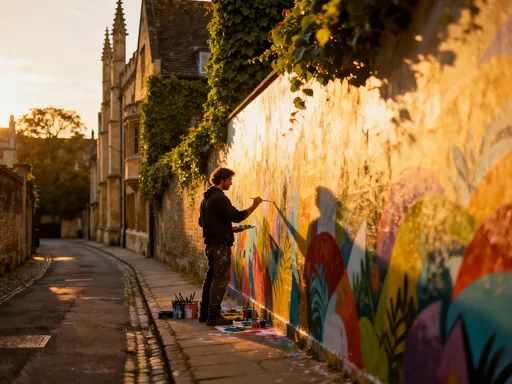
In Ljubljana, the streets themselves are a living gallery. Unlike cities where murals are commissioned and controlled, here the walls breathe with spontaneity. Walk through neighborhoods like Krakovska Cesta or Trnovo, and you’ll find art that feels both personal and public — like notes left behind by the city’s inner voice. These aren’t just decorations to beautify blank walls. They are stories, protests, dreams painted in bold strokes and subtle shadows.
One recurring theme is nature’s quiet reclamation of urban space. A massive mural in the Veveri district shows a fox emerging from a cracked concrete wall, its fur blending into vines and wildflowers. Another depicts a tree growing from a human skull, roots spreading into subway tunnels below — a meditation on memory and regeneration. International artists collaborate with locals, leaving behind works that speak to universal concerns through local imagery. A German artist once painted a series of floating islands above tram lines, each carrying a different endangered species native to the Balkans.
Perhaps the most memorable encounter came on a quiet afternoon near the old market. Around a bend, a colossal owl stared down from the side of a five-story building. Its eyes, painted with reflective pigment, glowed faintly even in daylight. Locals called it “The Guardian.” I later learned it was part of a campaign by a Slovenian environmental group highlighting deforestation in the Dinaric Alps. The artist had interviewed foresters and villagers, weaving their words into the texture of the feathers. This is street art with depth — not just seen, but felt.
What makes Ljubljana’s street art scene unique is its impermanence. Walls are repainted, buildings renovated, messages updated. A political protest piece might last only a few weeks before being covered by a new commission. This constant evolution means that no two visits are the same. For travelers who return year after year, the city reveals itself in layers — each visit uncovering a new conversation, a different emotion. It’s art that refuses to sit still, much like the city itself.
Art in the Everyday: Coffee, Books, and Courtyards
In Ljubljana, you don’t have to seek out art — it finds you in the pauses between moments. Sip a morning coffee at Café Šuklje, housed in a restored 19th-century pharmacy, and you’ll notice the walls change monthly. Local painters, photographers, and illustrators display their work in rotating exhibitions, turning breakfast into an impromptu gallery visit. A woman sketching in her notebook at the next table might be the artist whose watercolors hang just above her head.
At Kava 41, a cozy neighborhood café near the university, poetry readings double as performance art. On weekend evenings, chairs are rearranged, lights dimmed, and spoken word artists take turns at a small mic. The audience is small — often just ten or fifteen people — but deeply engaged. There’s no stage, no spotlight. Just voices filling the space between coffee cups and candlelight.
Even bookshops become stages for quiet creativity. Mestna Knjigarna, the city’s central bookstore, regularly hosts micro-exhibits in its ground-floor alcoves. A recent display paired vintage travel journals with hand-drawn maps of imaginary countries. Another featured ceramic teacups arranged to represent chapters of a novel. These aren’t grand installations. They’re delicate interventions — reminders that beauty can exist in the margins of daily life.
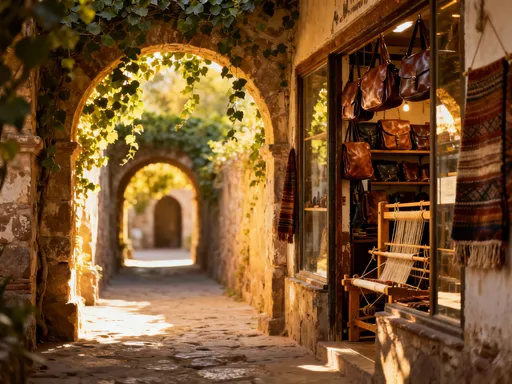
Then there are the hidden courtyards. Tucked behind unassuming doors in old apartment buildings, these green oases often hold small sculptures, wind chimes made from recycled glass, or benches carved with poetic inscriptions. Some are open to the public; others require a friendly nod from a resident. These micro-galleries redefine accessibility — not through signage or tickets, but through invitation. They reflect a philosophy of “slow art”: pieces meant to be discovered, not hunted. For the traveler juggling responsibilities back home, these quiet moments offer something rare — a sense of calm, of being seen, of connection without demand.
River as a Canvas: Floating Installations and Riverside Murals
The Ljubljanica River is more than a scenic backdrop — it’s a dynamic artery of artistic expression. Its embankments, bridges, and even the water itself serve as canvases for temporary and permanent works. As you stroll along the stone pathways, you’ll pass sculptures embedded into the walls, painted utility lockers, and murals that stretch across entire facades. The Dragon Bridge, guarded by iconic bronze dragons, has become a symbol not just of the city, but of its creative spirit. Locals touch the dragons’ tails for luck; children climb onto their backs; artists project animated stories onto their scales during festivals.
Seasonal installations bring new life to the river each year. In summer, floating gardens made from recycled plastic bottles and native plants drift gently downstream. Designed by environmental artists, these mobile ecosystems clean the water while doubling as living sculptures. Visitors can walk across connected platforms during special events, listening to guided talks about urban biodiversity. In winter, the tone shifts. Light projections dance across the water’s surface — geometric patterns, falling snowflakes, even animated folk tales from Slovenian tradition. These ephemeral works remind us that art, like water, is fluid and ever-changing.
One particularly moving project transformed old houseboats into sound installations. Each vessel played a different audio loop — recordings of elderly residents telling stories of life along the river in the 1950s, or children laughing during summer swims. Visitors could step aboard, sit on wooden benches, and let the voices wash over them. It was history not read, but felt.
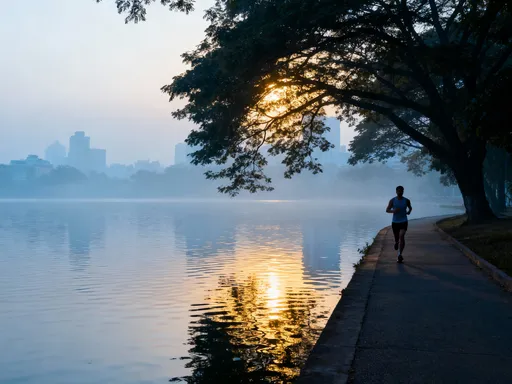
The city’s approach to public art along the river reflects a broader philosophy: that beauty and meaning should be part of shared space. There’s no fence, no fee, no timetable. Whether you’re jogging at dawn, pushing a stroller in the afternoon, or walking hand-in-hand with a friend at dusk, the art is there — waiting, not demanding attention, simply existing. It’s a model of inclusivity, where culture isn’t something you consume, but something you live within.
How to Explore Like a Local (Without Trying Too Hard)
You don’t need a guidebook or a guided tour to experience Ljubljana’s hidden art. In fact, the best discoveries often happen when you’ve stopped looking. The key is to slow down and stay open. Walk the river path during golden hour — late afternoon, when the light turns honeyed and long shadows stretch across the water. That’s when murals seem to come alive, their colors deepening, their messages growing clearer.
Follow the street art trails on foot. While there are informal maps available online, the joy lies in stumbling upon something unmarked. Turn down a side alley. Peek through an open gate. Look up — not just at building facades, but at rooftops, fire escapes, even drainpipes. Some of the most striking pieces are in places you’d never expect.
Talk to people. Baristas, booksellers, and shop owners often know about upcoming pop-ups, gallery openings, or neighborhood projects. A simple “Do you know of any interesting art around here?” can lead to a handwritten note with an address, or an invitation to a private viewing. Locals take pride in their city’s creative spirit and are usually happy to share it.
Time your visit with First Friday, a monthly event held on the first Friday of every month. Galleries across the city stay open late, offering free entry, live music, and refreshments. The atmosphere is festive but relaxed — families, artists, and retirees mingle freely. It’s the perfect way to experience the art scene without feeling like an outsider.
And most importantly, allow for detours. Let yourself get “lost” in the old town, follow a stray cat down a narrow lane, stop for a slice of apple strudel just because the smell is irresistible. The magic of Ljubljana lies not in any single artwork, but in the cumulative effect of small, unexpected moments. It’s in the way a poem appears on a café napkin, or how a child points at a mural and says, “That dragon looks like it’s about to fly.”
Conclusion
Ljubljana doesn’t fit the mold of a traditional art capital. There are no Louvres, no MoMAs, no endless queues outside iconic museums. And yet, it may be one of Europe’s most authentic art destinations — not because of what it has, but because of how it lives. Here, art isn’t something you visit. It’s something you encounter, often when you least expect it. It’s in the graffiti on a back alley wall, the poetry taped to a bookstore window, the laughter echoing from a hidden courtyard stage.
The city teaches a different way of traveling — one rooted in presence rather than pursuit. It asks you to slow down, to look closely, to stay open to the unscripted. In a world where tourism often feels transactional, Ljubljana offers something rare: connection. Not just to art, but to the people who make it, the spaces that hold it, and the quiet beauty of a life lived with intention.
So go beyond the guidebooks. Skip the checklist. Let the city reveal itself in fragments — a color, a sound, a fleeting moment of wonder. Because in Ljubljana, the best art isn’t found. It finds you.