You Won’t Believe What I Saw in Muscat — This Place is Unreal
Muscat, Oman, isn’t just another stop on the map — it’s a sensory journey. From sunrise over the Gulf of Oman to golden light spilling across ancient forts, every view feels intentional, almost cinematic. I went looking for scenery but found something deeper: a city where nature and culture blend seamlessly. What makes its viewing experiences truly special isn’t just beauty — it’s accessibility, quiet authenticity, and the way moments unfold without crowds or hype. There’s a rhythm to the city’s visual language, one shaped by sunlight, sea, and stone. Whether you’re standing beneath a soaring dome or walking along a quiet promenade, Muscat invites you to see not just with your eyes, but with awareness. This is a place where observation becomes reflection, and where the simplest views can leave the deepest impressions.
First Glimpse: Arriving in Muscat at Sunrise
There is a moment, just before touchdown at Muscat International Airport, when the city reveals itself in layers. If your flight arrives in the early morning — ideally between 6:30 and 7:30 a.m. — you’ll witness Muscat bathed in soft, golden light, the kind that softens edges and enhances contrast. From the air, the city appears as a careful arrangement of white stone structures nestled between arid hills and the shimmering expanse of the Gulf of Oman. The Hajar Mountains rise in the distance like a fortress of stone, their jagged peaks catching the first rays of sun. This is not a sprawling metropolis; it’s a capital that respects its surroundings, growing thoughtfully rather than aggressively. The urban layout follows the natural contours of the land, with neighborhoods cascading down toward the sea, each building painted in the traditional Omani white or beige.
For travelers seeking the best aerial view, seating on the left side of the plane when arriving from the north or west offers the most dramatic perspective. As the aircraft descends, you’ll see the coastline curve gently, dotted with small inlets and marinas. The contrast between the deep blue sea and the pale desert is striking, especially under the morning sun. This first glimpse sets the tone for the entire visit — one of harmony between environment and architecture. The city does not dominate the landscape; it belongs to it. This sense of integration is rare in modern capitals, where urban development often overshadows natural beauty.
Arriving early has additional benefits beyond the visual. Morning light in Muscat is not only ideal for photography but also for temperature. The desert climate means days can become hot quickly, especially from late morning onward. Landing at sunrise allows visitors to begin their exploration while the air is still cool and the streets are quiet. It also provides a natural rhythm to the day: start with observation, move into cultural immersion, and end with reflection as the sun sets. Airlines such as Oman Air and select international carriers offer early arrivals from Dubai, Doha, and Istanbul, making this timing accessible to many travelers. For those planning ahead, choosing a morning flight isn’t just practical — it’s a way to begin the journey with intention.
The Grand Mosque’s Quiet Majesty: More Than Just a Photo Op
Standing before the Sultan Qaboos Grand Mosque, even for the first time, feels less like encountering a monument and more like entering a space designed for stillness. Completed in 2001, the mosque is a masterpiece of Islamic architecture, built to honor the 30th year of Sultan Qaboos’s reign. Its grand scale is immediately apparent — five minarets rise symmetrically, and the central dome soars to 50 meters. Yet, despite its size, the mosque exudes serenity. The white marble exterior reflects the changing light throughout the day, glowing softly at dawn and shimmering under the midday sun. What truly distinguishes the viewing experience, however, is the interior — a space where craftsmanship and light converge to create a sense of awe without overwhelming the senses.
Visitors enter through designated public gates, typically open from 8:00 a.m. to 11:00 a.m. on weekdays, excluding Fridays. To avoid crowds, arriving shortly after opening on a Tuesday or Wednesday is ideal. The dress code is strictly observed: women must wear headscarves and long sleeves with full-length skirts or pants; men should avoid shorts and sleeveless shirts. Modest attire is not only a sign of respect but also enhances the experience, encouraging a mindset of reverence. Once inside, the vast prayer hall unfolds in a symmetrical embrace. The most striking feature is the hand-embroidered carpet, covering 4,300 square meters — one of the largest in the world. Woven with wool and silk, it contains over 1.7 million knots per square meter and was crafted by 600 artisans in Iran over four years. Standing above it on the surrounding balconies allows for a full appreciation of its intricate geometric patterns.
Equally breathtaking is the crystal chandelier suspended beneath the dome. Imported from Germany, it weighs 8.5 tons and is adorned with over 600,000 individual crystals. When sunlight filters through the dome’s high windows, it refracts through the chandelier, casting delicate reflections across the marble floor. This interplay of light and material transforms the space hour by hour. The viewing experience here is not static; it evolves with the sun. While photography is permitted in most areas, flash and tripods are prohibited, preserving the quiet atmosphere. The message is clear: this is not a site for performance, but for presence. Every detail, from the calligraphy on the walls to the precise alignment of columns, invites contemplation. For many visitors, this moment of stillness becomes one of the most memorable parts of their journey.
Mutrah Corniche: Where Sea Meets Soul
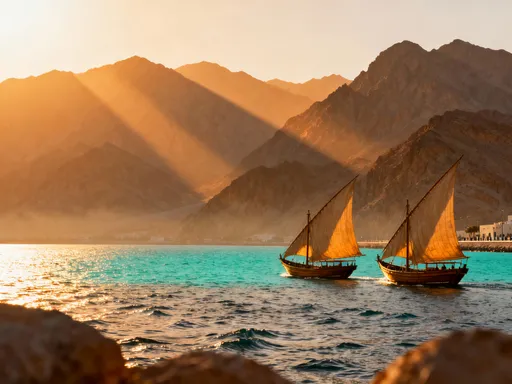
If Muscat has a heartbeat, it pulses strongest along the Mutrah Corniche. Stretching between the historic Mutrah Fort and the bustling fish market, this seaside promenade offers one of the city’s most dynamic viewing experiences. At golden hour — roughly one hour before sunset — the scene transforms. The sea turns molten gold, traditional dhow boats rock gently in the harbor, and the limestone cliffs behind the city glow in warm hues. The Corniche is not just a place to walk; it’s a place to absorb. Families gather on benches, children fly kites near the water, and fishermen mend nets with practiced hands. The air carries the scent of salt, grilled fish, and incense from nearby souks. This is Omani life in motion, unhurried and deeply rooted in tradition.
Walking the full length of the Corniche provides shifting perspectives. Starting near Mutrah Fort, the view looks westward, offering a panoramic sweep of the harbor. As you move south, the perspective shifts, revealing the contrast between old and new Muscat — historic buildings with carved wooden balconies stand beside modern villas perched on the hills. Halfway along, a small park with palm trees and shaded seating offers a natural pause point. This is also one of the best spots for photography, especially when the evening call to prayer echoes from nearby mosques, blending with the sound of waves. Continuing toward the fish market, the atmosphere becomes more active. Vendors pack up their stalls, and the seafood auction begins, a daily ritual that draws both locals and curious visitors.
Practical considerations enhance the experience. The Corniche is safe and well-lit, making evening walks pleasant even for solo travelers. Parking is available near the fort and at designated lots along Sultan Qaboos Street, though using a ride-hailing app like Careem or local taxi services is often more convenient. When photographing people, especially fishermen or vendors, it’s important to ask for permission. Many are happy to pose, but respect is paramount. The Corniche is not a stage; it’s a living space. By observing quietly and engaging politely, visitors can witness authenticity rather than performance. Whether you come for the views, the culture, or simply a moment of peace, the Corniche delivers on all levels.
Fortresses in the Hills: Al Jalali and Al Mirani from a Local’s Eye
Rising from rocky outcrops along the eastern edge of Mutrah, Al Jalali and Al Mirani forts are among Muscat’s most iconic silhouettes. Built in the 16th century by the Portuguese and later restored by Omani rulers, these twin fortresses guard the entrance to the harbor. While they are not open to the public — serving today as official military installations — their visual impact remains powerful. You don’t need to enter to appreciate them. Their presence alone tells a story of defense, power, and resilience. Perched on steep cliffs, their thick stone walls and rounded towers contrast sharply with the soft blues of sea and sky. From a distance, they appear almost theatrical, like structures from a historical epic. Yet their authenticity is undeniable; these are not reconstructions, but living monuments to centuries of maritime history.
The best views of the forts come from multiple vantage points. The Mutrah Corniche offers a frontal perspective, especially from the northern end near the fort. Here, you can capture both structures with the harbor in the foreground, creating a layered composition. For a closer look, walking through the narrow alleys behind the souk leads to elevated viewpoints where the forts loom dramatically above. These paths, paved with stone and lined with old Omani houses, provide a sense of discovery. Another excellent spot is from the water itself. Traditional dhow cruises, available for short trips along the coast, offer a unique angle — looking back toward the city with the forts standing sentinel on either side. These tours, typically lasting 30 to 45 minutes, are peaceful and informative, often narrated by local captains who share stories of the harbor’s past.
Photographers should note that zoom lenses are more effective than wide angles, given the restricted access. The atmosphere, however, matters more than the shot. There is a quiet dignity to these forts, a sense that they have watched over Muscat for generations without needing to speak. Their closed gates do not feel exclusionary; they feel protective. This is not a place of tourist spectacle, but of historical weight. By observing from a distance, visitors participate in a long tradition of respect — one that values preservation over intrusion. In a world where ancient sites are often overexposed, Al Jalali and Al Mirani remind us that some things are more powerful when left untouched.
Hidden High Ground: Finding the City’s Best Viewpoints
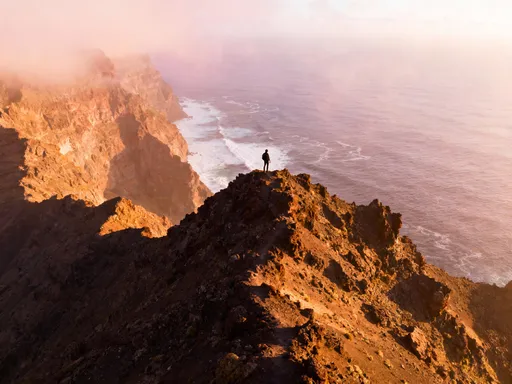
Beyond the well-trodden paths, Muscat reveals its most breathtaking panoramas from elevated, lesser-known spots. While guidebooks highlight the obvious landmarks, locals know that some of the best views come from quiet ridges and residential hillsides. One such location is in the Qurum Heights area, where winding roads lead to overlooks with unobstructed vistas of the coastline. From here, you can see the curve of the bay, the white domes of distant mosques, and the sea stretching to the horizon. Another promising spot is near the Oman Botanic Garden construction site — while the garden itself is not yet fully open, the surrounding elevation offers sweeping views, especially at sunrise. These locations are not marked on most tourist maps, but they are accessible with a bit of planning.
Reaching these viewpoints often requires transportation. Ride-hailing apps like Careem or local taxi services can take you close to trailheads or safe stopping points. Once on foot, wearing sturdy footwear is essential — terrain can be uneven, and some paths are unpaved. Carrying water is also advisable, particularly during warmer months when temperatures rise. Safety is a priority: these areas are residential, so visitors should stay on public roads, avoid trespassing, and keep noise to a minimum. The goal is not to conquer the landscape, but to observe it with care. Many Omani families enjoy evening walks in these neighborhoods, making them welcoming spaces for respectful exploration.
What makes these hidden viewpoints special is their stillness. Unlike crowded tourist spots, they offer solitude and space for reflection. At dawn, the city wakes slowly — lights flicker off in villas, birds call from palm trees, and the first boats head out to sea. At dusk, the sky fills with color, and the city’s lights begin to twinkle like stars on earth. These moments are fleeting, but profound. For travelers seeking more than checklist tourism, these elevated perspectives provide a deeper connection to Muscat’s essence. They remind us that beauty often lies not in the famous, but in the quietly overlooked.
Sunset at Qurum Natural Park: Simplicity That Stuns
Amid the quiet neighborhoods of Qurum, a narrow strip of protected coastline offers one of Muscat’s most understated yet powerful viewing experiences. Qurum Natural Park is not a grand destination with attractions or facilities; it is a preserved stretch of rocky shore, swaying palms, and native vegetation. What it lacks in amenities, it makes up for in atmosphere. At sunset, the park transforms. The western-facing shoreline catches the last light, turning the rocks into warm amber and painting the sky in soft pinks and oranges. The sound of waves is constant but gentle, a soothing backdrop to evening strolls. Families gather on picnic blankets, couples walk hand in hand, and photographers set up tripods along the water’s edge. There is no admission fee, no schedule — just the rhythm of nature and the comfort of open space.
Compared to busier spots like the Corniche or Mutrah, Qurum Natural Park feels like a secret. Crowds are minimal, even on weekends, and the pace is slow. This makes it ideal for those seeking tranquility. The park closes at 9:00 p.m., so visitors should time their arrival to allow at least an hour before sunset. Entry points are clearly marked, with the main access near the intersection of Sultan Qaboos Street and Qurum Street. Parking is limited, so arriving early or using a taxi is recommended. Benches are scattered along the path, but bringing a light mat or blanket enhances the experience, especially for longer stays.
The simplicity of this place is its strength. There are no vendors, no loud music, no distractions. Just sea, sky, and stone. For parents, it’s a safe and calming environment for children to explore nature. For solo travelers, it offers a rare chance to be still. The viewing experience here is not about capturing the perfect photo, but about being present. As the sun dips below the horizon and the first stars appear, the park settles into a peaceful hush. In that moment, Muscat reveals a different side — not as a capital, but as a home, cradled by land and sea.
How Light Defines Muscat: A Photographer’s Perspective
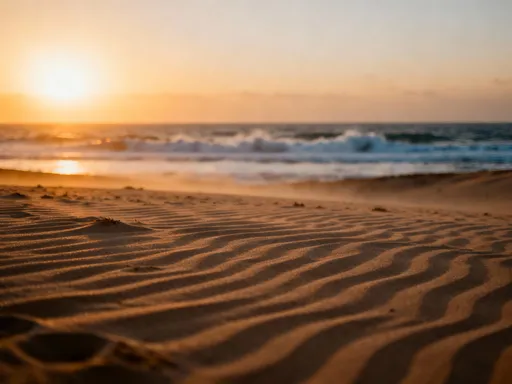
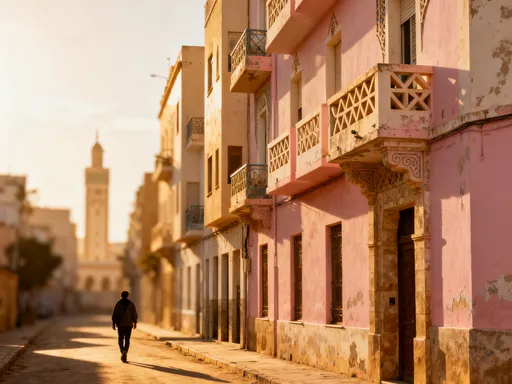
In Muscat, light is not just an element of photography — it is the subject. The city’s architecture, built largely from white limestone and pale stucco, acts like a canvas for the sun’s daily journey. At dawn, shadows are long and soft, defining the texture of ancient walls and the curves of domes. The blue hour, just before sunrise, casts a cool, ethereal glow over the skyline, ideal for capturing cityscapes with depth and mood. Midday brings high contrast — sharp lines, bright highlights, and deep shadows — which can be challenging but rewarding for those seeking dramatic compositions. Then, in the late afternoon, the golden hour bathes everything in warmth, enhancing the natural beauty of the sea, mountains, and buildings.
For photographers, understanding this rhythm is key. A single location can offer entirely different images depending on the time of day. The Mutrah Souk, for example, appears bustling and colorful at noon, but takes on a mysterious, almost cinematic quality in the early morning light. Similarly, the Grand Mosque’s dome reflects the sky differently at various hours — cool and serene in the morning, radiant and golden in the afternoon. Using a polarizing filter can enhance sea shots by reducing glare and deepening the blue of the water. A tripod is useful for low-light conditions, especially during blue hour or evening shots of illuminated buildings.
While professional gear offers advantages, even smartphone cameras can produce stunning results with mindful technique. The most important tools are patience and observation. Dressing modestly remains essential, not only for cultural respect but also for blending in and avoiding disruption. Moving slowly, speaking quietly, and asking permission when photographing people fosters trust and often leads to more authentic interactions. In Muscat, the best images are not taken — they are given, through moments of connection and understanding.
Muscat’s viewing experiences aren’t about chasing landmarks — they’re about presence. Each vista, whether grand or simple, invites you to slow down and absorb. With smart timing, respectful exploration, and an eye for light, the city reveals layers most tourists miss. It’s not just what you see — it’s how you see it.